Summary:
Preparing fragile items properly before a long-distance move helps reduce the risk of damage and keeps valuable belongings secure throughout transportation. Careful packing techniques, quality materials, organized labeling, and proper handling all contribute to a smoother relocation while protecting delicate possessions from start to finish.
Long-distance moves require careful planning, especially when valuable and delicate belongings are involved. Glassware, artwork, electronics, antiques, mirrors, and family keepsakes can easily become damaged if they are packed without the right materials or techniques. A few extra minutes spent preparing these items properly can prevent costly replacements and unnecessary stress after arriving at the new home.
Successful packing of fragile items starts with choosing quality supplies, using proper cushioning, and organizing boxes in a way that reduces movement during transportation. This guide explains practical methods for protecting delicate belongings, avoiding common packing mistakes, and helping valuable possessions arrive safely at their destination.
Why Fragile Items Need Extra Attention
Long-distance moves involve repeated loading, transportation, unloading, and handling, increasing the risk of bumps, shifting, and breakage. Fragile belongings require extra care, proper packing materials, and secure placement to reduce damage. It is also important to understand available valuation coverage and document valuable items before an interstate move.
Gather the Right Packing Supplies
Using quality packing materials provides the first layer of protection for delicate belongings. Reusing worn or damaged boxes may save money initially, but they often fail to support heavier or fragile items during transportation.
· Strong Moving Boxes
Choose sturdy corrugated moving boxes designed to carry household goods. Smaller boxes usually work better for heavy, fragile items because they prevent excessive weight and are easier to carry safely. Avoid overfilled boxes that place unnecessary pressure on delicate contents.
· Protective Wrapping Materials
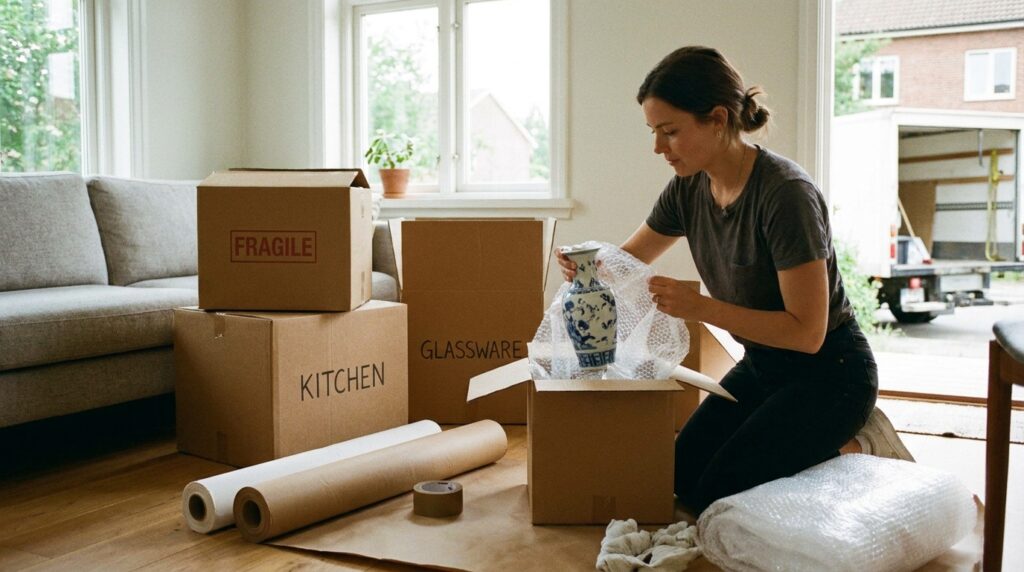
Bubble wrap remains one of the most effective materials for protecting breakable belongings. Packing paper also helps prevent scratches on dishes, glassware, ceramics, and decorative items, making it an important part of protecting valuables during move preparations.
Soft household items like towels or blankets can provide extra cushioning around larger fragile belongings, but they should not replace proper packing materials for highly delicate items.
· Packing Tape and Labels
Strong packing tape keeps boxes securely sealed throughout transportation. Clearly labeling every fragile box with “Fragile,” “This Side Up,” and the destination room helps movers handle each package with greater care.
· Box Dividers and Cushioning
Glassware, wine glasses, mugs, and decorative bottles benefit from cardboard dividers that separate each item. Any empty space inside the box should be filled with packing paper, foam, or cushioning material to prevent movement during transport.
Prepare Different Fragile Items Correctly
Different belongings require different packing methods. Using the right technique for each category greatly improves protection throughout the move.
· Glassware and Dishes
Wrap every glass or dish individually with packing paper before adding bubble wrap around especially delicate pieces. Plates should be packed vertically instead of lying flat because this position reduces pressure during transportation. Fill every empty space inside the box before sealing it.
· Mirrors and Picture Frames
Mirrors and framed artwork should receive special attention because even minor impacts can cause cracks. Cover both sides with protective cardboard before encasing the item in moving blankets or bubble wrap. Mirror boxes provide additional stability for larger pieces.
· Electronics
Original manufacturer packaging offers the best protection whenever available. If original boxes are unavailable, wrap electronics carefully with anti-static materials and surround them with cushioning inside appropriately sized boxes. Remove batteries when recommended by the manufacturer and organize cables in labeled bags.
· Antiques and Collectibles
Older furniture, collectibles, and heirlooms often require specialized handling. Loose parts should be removed, wrapped separately, and clearly labeled. Delicate finishes benefit from furniture blankets rather than plastic wrap placed directly against wood surfaces.
Professional appraisals and photographs also help document condition before moving, particularly for valuable belongings.
Packing Guide for Common Fragile Items
| Item | Recommended Protection | Extra Tip |
| Glassware | Packing paper and bubble wrap | Use box dividers |
| Dinner Plates | Wrap individually and pack vertically | Fill empty spaces tightly |
| Mirrors | Corner protectors, cardboard, moving blankets | Use mirror-specific boxes |
| Electronics | Original box or padded moving box | Label cables separately |
| Artwork | Bubble wrap and corner guards | Keep upright during transport |
| Ceramic Decorations | Multiple layers of wrapping | Avoid stacking heavy items on top |
Common Packing Mistakes to Avoid
Packing mistakes often lead to unnecessary damage, even when quality moving supplies are used.
· Leaving Empty Space Inside Boxes
Items that shift inside boxes face a much greater chance of breaking. Fill every gap with packing paper, foam, or cushioning materials before sealing the box.
· Using Oversized Boxes
Large boxes encourage overpacking and become difficult to carry safely. Smaller boxes provide better stability for delicate belongings while reducing pressure from heavy loads.
· Mixing Heavy and Fragile Items
Heavy books, tools, or appliances should never share the same box as delicate glassware or collectibles. Keeping fragile belongings separate helps reduce the risk of crushing during transportation.
· Skipping Labels
Clearly marked boxes help everyone involved understand which packages require careful handling. Professional movers appreciate detailed labels because they improve loading and unloading efficiency.
For families seeking dependable relocation support, City to City Moving Company offers organized packing solutions and careful transportation. Choosing our trusted company helps protect fragile household belongings throughout every stage of a long-distance move.
Create an Inventory Before Moving
Keeping an inventory of fragile belongings helps simplify both packing and unpacking. Photograph valuable items before placing them into boxes. Record serial numbers for electronics and create a checklist that identifies which box contains each valuable possession.
Federal moving guidance also recommends documenting high-value belongings and informing the moving company about articles of extraordinary value before transportation begins.
Protect Valuable Belongings Throughout the Move
Packing alone is only part of the process. Valuable belongings also need careful handling before, during, and after transportation to reduce the chance of loss or damage.
· Keep Important Documents Separate
Passports, financial records, legal paperwork, medical files, and personal identification should travel with the owner instead of inside the moving truck.
Keeping these documents nearby makes them easier to access after arriving at the new home and reduces the possibility of losing important records during transit.
· Carry High-Value Items Personally
Small valuables such as jewelry, family heirlooms, cash, collectible coins, and sentimental keepsakes should remain under personal supervision whenever possible.
Federal moving guidance recommends informing movers about high-value belongings and understanding available valuation coverage before an interstate relocation.
· Purchase Appropriate Protection
Professional movers provide liability coverage options for interstate moves. Reviewing these options before moving day helps homeowners understand what is covered if damage occurs during transportation.
Some families also choose additional third-party insurance for expensive belongings that exceed standard valuation limits.
· Inspect Items Upon Arrival
Unpack fragile belongings carefully and inspect them as soon as practical after delivery.
If damage is discovered, photograph the affected items immediately and report the issue according to the moving company’s claim process. Keeping inventory records and photographs makes documentation much easier.
Smart Packing Habits That Make a Difference
Small packing decisions often have a major impact on the condition of fragile belongings after a long-distance move.
· Pack Room by Room
Packing one room at a time keeps belongings organized and reduces confusion during unpacking.
Boxes can be labeled with both the room name and a brief description of the contents, making it easier to locate delicate items after arrival.
· Avoid Overloading Boxes
Heavy boxes place additional pressure on fragile contents and become more difficult to lift safely.
Using several smaller boxes instead of one oversized container helps reduce strain on both the contents and the people handling them.
· Secure Every Box Properly
Every box should be reinforced with quality packing tape across the bottom and top seams.
Boxes containing fragile belongings may also benefit from additional tape around the edges for extra support during transportation.
· Create a Moving Essentials Box
Prepare one clearly labeled box containing medications, chargers, basic tools, toiletries, cleaning supplies, and several days of everyday necessities.
Keeping essential items separate reduces unnecessary unpacking while allowing fragile boxes to remain undisturbed until they can be opened carefully.
Practical Tips for a Successful Long-Distance Move
Preparing fragile belongings takes planning and organization. One of the best tips for long-distance packing is to start several weeks before moving day. Early preparation provides enough time to gather quality packing supplies, organize items by room, and replace weak boxes.
Keep fragile items grouped together instead of mixing them with heavier belongings. Label boxes clearly and maintain an inventory to track valuable possessions. A well-organized packing system makes unpacking easier and helps ensure delicate items arrive safely.
FAQs
What is the best material for wrapping fragile items?
Bubble wrap, packing paper, foam sheets, and sturdy corrugated boxes provide excellent protection for delicate household belongings during long-distance moves.
Should fragile boxes be filled completely?
Yes. Empty spaces should be filled with packing paper, foam, or other cushioning materials to reduce movement inside the box during transportation.
How should valuable electronics be packed?
Electronics should, whenever feasible, be stored in their original manufacturer’s packaging. If those are unavailable, use appropriately sized moving boxes with anti-static wrapping and protective cushioning.
Conclusion
Preparing fragile belongings for a long-distance move requires thoughtful planning, quality packing materials, and careful organization from start to finish. Wrapping each item properly, selecting sturdy boxes, minimizing empty space, and documenting valuable possessions all contribute to a safer relocation. Taking extra time to prepare delicate belongings can greatly reduce the risk of damage and provide greater peace of mind throughout the moving process. Careful planning today helps ensure treasured possessions arrive safely and are ready to enjoy in the new home.
City to City Moving Company helps customers protect delicate belongings with professional handling and organized moving solutions. Trust our experienced city-to-city movers to transport valuable possessions safely from pickup to delivery.